Sciatica Treatment in Malleshwaram
We find where the nerve is trapped, not just treat the back.
First consultation is free. No card, no commitment.
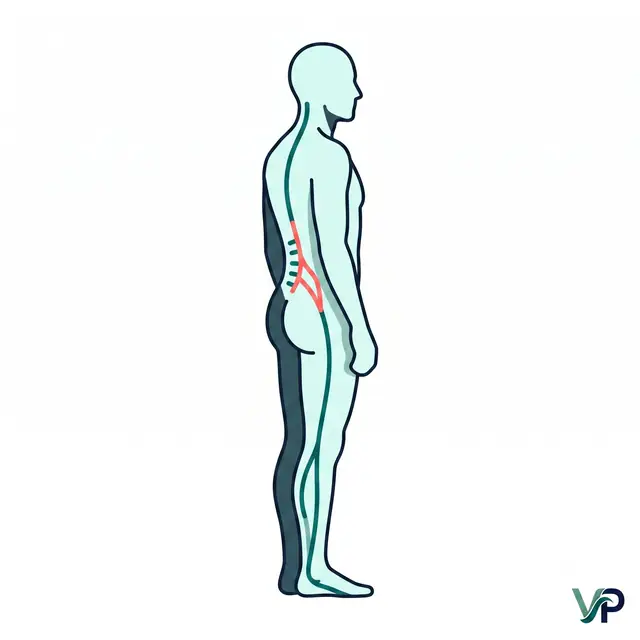
Pain that travels down the leg, with pins and needles or weakness, usually means a nerve is being compressed or irritated. Where along its path that happens changes what helps. We test for it directly rather than treating the back in general.
- Neurological testing to locate where the nerve is being irritated
- Traction, manual therapy and nerve mobilisation as indicated
- Clear guidance on what to avoid while the nerve settles
“I was suffering with sciatica, took the treatment from Vector Physio. Navas was my physiotherapist, excellent service. Recommended for people suffering with sciatica.”
Ten sessions, pain scored throughout. If your score has not improved, we refund the full amount.
What we have actually measured
Every patient here is scored 0 to 10 for pain at the first visit and tracked through treatment. These are our own records, not a survey.
sciatica · 8 patients have completed treatment
Median pain at the first visit 8/10, now 1/10.
88% median pain relief · 8 sessions typically · 8 patients measured.
Across the clinic we have tracked 56 patients: 40 recovered or improved substantially, 14 are still in treatment, and 2 stopped coming. The relief figures above cover only patients who completed treatment and were scored at both ends. Updated August 2026.
What patients with sciatica say
“I was suffering with sciatica, took the treatment from Vector Physio. Navas was my physiotherapist, excellent service. Recommended for people suffering with sciatica.”
“I was suffering from severe, persistent back pain, and thanks to his constant effort, dedication and incredible skills, I am now completely pain-free. Dr Vishnu is highly skilled, knowledgeable and completely trustable.”
“The therapists are fantastic, attentive, and very thorough with their initial assessments. I noticed a major relief in my pain after just a few sessions.”
5.0 from 155 reviews on Google. Shown as written, trimmed only for length.
Your first visit, step by step
- Straight leg raise and slump testing to confirm the nerve is mechanically involved, plus reflex, power and sensation testing to map which root
- A red-flag screen — bladder or bowel changes, saddle numbness or weakness in both legs mean you leave with a referral, not a treatment plan
- Finding your directional preference: the movement that eases the nerve and the one that provokes it
You leave knowing what is wrong, in plain language, whether or not you book anything.
The sign we look for: centralisation
When sciatica improves, the pain does not fade evenly. It retreats up the leg toward the spine — the foot clears first, then the calf, then the thigh. Your back may feel worse for a few days while that happens. It is the most reliable early sign treatment is working, and it is also why people abandon treatment that was working. We track it session by session so you can see it.
Sciatica isn't one condition — which is why generic treatment fails
Pain down the leg has several common causes: a disc pressing on a nerve root, the piriformis muscle compressing the nerve behind the hip, narrowing where the nerve exits the spine, or referred pain from the sacroiliac joint that is not nerve pain at all. They can feel identical to you. They are not identical to treat — traction helps one of them and aggravates another. This is the most common reason people arrive here after weeks of physiotherapy elsewhere with nothing to show for it.
What treatment involves
Traction where a disc is compressing the nerve, neural mobilisation to restore the nerve's ability to glide, manual therapy for the joints and muscle contributing to it, dry needling when the piriformis is the culprit, and progressive loading so the surrounding structures are strong enough to stop it recurring. You will also get specific instructions on what to avoid while the nerve settles.
If it does not work, you do not pay
Ten sessions, with your pain scored on a 0 to 10 scale at the start and tracked throughout. If your score has not improved, we refund the full amount.
44/1, Kamakshi Bhavan, 4th Cross, Sampige Road
Malleshwaram, Bengaluru 560003
Monday to Saturday, 7am to 9pm. Closed Sundays.
KPME-licensed clinic · IAP-recognised physiotherapists